
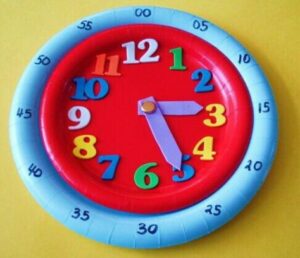
Magic Spell Pre-School’s purpose is to create a happy and secure environment within the pre-primary school, in which all pupils realize and develop their own special abilities in constant awareness of the needs of others. We recognize that every child is unique and therefore we fully embrace and support every child. We believe that happy and secured environment is an integral part of a child’s educational experience.
We follow the Early Years Foundation Stage Principles in providing an inclusive education tailored to individual needs, both through ability and interest. We are committed to facilitating active learning opportunities both using indoor and outdoor opportunities and benefits from most of the facilities on the main school site, in particular specialist teaching staff for special skills. We believe every child deserves the best possible start in life to support and fulfil their potential. We aim to provide a warm, loving and stimulating environment which will promote all areas of your child’s development.
Your child will experience a broad and balance curriculum which will be differentiated to suit his or her abilities, interests and personality. When planning lessons and activities, our emphasis is on fun, enjoyment and challenge. We aim to encourage your child to adopt a positive attitude towards learning which will provide a solid foundation for their future education.
Magic spell advocates connected learning through integrated curriculum with the help of Montessori Methodology.
An approach to education. It is not a learning theory. It is not a specific set of teaching techniques, and it is not bound by specific educational environments or contexts. Connected learning is a set of powerful design principles that engage, empower, and equip students to learn effectively, purposefully, and continuously throughout their lives.
As educators, we are constantly searching for new ways to help students make sense of the multitude of life’s experiences and the bits and pieces of knowledge they gain from a traditionally departmentalized curriculum. Students today continue to move from one discipline to the next forcing the information to be disconnected to anything that resembles real life situations. To lighten some of the fragmentation our students and teachers experience, holistic and integrated curriculums are being proposed and adopted by many school districts. A major driving force behind integrated teaching and learning is the belief that when themes, subjects, or projects are combined students begin to see meaningful connections between the subject matter. Material then serves as a vehicle for learning rather than simply
pieces of information. In addition to this, repetition of material from one subject to the next is essentially eliminated.
The integrated curriculum approach is successful in making students more aware of content area connections, challenging students, providing a learning environment supporting academic and social needs, dissolving the boundaries among the disciplines, and fostering stronger student/teacher relationships.
This framework is flexible with regard to duration of interventions.
High quality differentiated instruction provided by the teacher for all students.
Supplemental strategic interventions provided by teacher and/or support person. Tier II is in addition to Tier I.
Intense individualized interventions provided by support person.
“The goal is for the school to intervene, or step in, and start helping before anyone falls really far behind
In a quest to improve the abilities of the child, the Syllabus for UKG has been designed by allotting special focus on the areas mentioned below.
The primary purpose of UKG syllabus is to ensure that the buds of learning starts growing in your kid. We have created the UKG syllabus based on latest patterns of all boards. ‘Magic Spell ‘has created the curriculum and worksheets to ensure your kid develops the Four Core Skills of Language Learning (Listening, Speaking, Reading and Writing) problem solving, imagination and grasping powers. KG2 syllabus focuses on overall development of a kid and making him ready for Primary school education.
The main focus of our CURRICULM is skill development …Our aim is to improve your child’s
Comparison
Numbers (1-100)

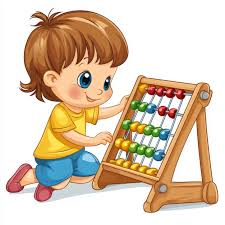
The abacus is indeed a timeless tool that offers numerous benefits for children’s cognitive development. By introducing the abacus at a young age, parents and teachers can help kids:
The abacus’s visual and tactile nature makes it an engaging and interactive learning tool. By starting early, children can develop a deep understanding of mathematical concepts and build a strong foundation for future academic success.
As you said, making children fall in love with learning is essential, and the abacus can be a fun and rewarding way to do so!
Colours
Shapes – Decomposing Shapes
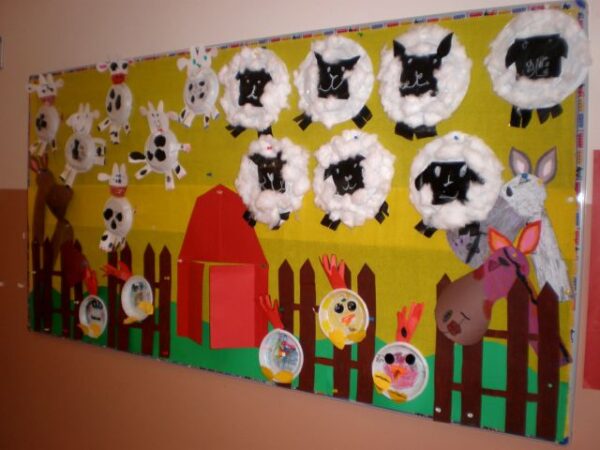
Animals
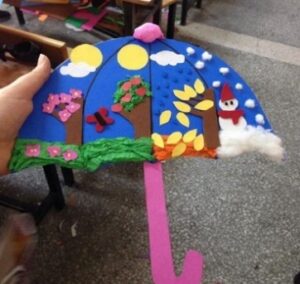
Seasons
Projects
These days we hear a lot of talk about teaching kids values. According to a major survey by the organization Public Agenda, more than six in ten adults are identified “as a very serious problem”, the reason being young people’s failure to learn fundamental moral values, including honesty, respect, and responsibility for others.
We need to help children not only know values but develop a deep commitment to values. Values such as fairness, kindness and responsibility for others should be an integral part of a child’s self or identity. By requiring children to help around the house, by insisting that children be respectful to us, to their friends, to our friends and to strangers, by talking to children about why values are important–among many strategies–we can weave values such as responsibility for others into children’s sense of self from an early age.
Often it is emotions, such as the fear of being a “loser,” that cause us to transgress. Developing children’s morality is about preventing children from suffering high levels of shame, envy, entitlement and other destructive emotions and helping children manage these feelings.
Children learn respect at home based on how parents and others in their lives treat each other. Your child will strive to model your behavior, so if you are courteous, using “please,” “you’re welcome,” “thank you” and similar phrases, your child will follow suit. It is also important to teach your child how to respect others’ opinions and property so that he can create healthy relationships.
It can be all too easy to take others for granted and forget to show others that they are appreciated. Teaching your child to be thankful each day, even for the little things like a smile or good weather. Remind him that life is a blessing and not everyone has the benefits he has, such as food, shelter, friends, nice clothing, etc. Helping your child to understand this will make him more appreciative for what he has.
Humility is often overlooked but this is an essential quality to have. This does not necessarily mean lacking pride for your accomplishments but refers to having the courage to apologize when you have done something wrong. A good parent will stress the importance of a sincere apology.
Responsible children grow into responsible adults. It is important to teach children to take responsibility for both the good and bad actions they do. This helps to prevent your children from growing into whiny individuals who are always trying to blame others for things they have done wrong.